Astrogator's Logs

New Words, New Worlds
Rest
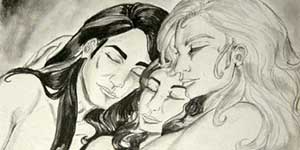
Artist, Heather Oliver             

Archive for the 'History' Category

Sex by Choice: the Highest Compliment

Monday, March 5th, 2012

Anyone with a functioning cortex knew that Rush Limbaugh is a vile slug from the moment he uttered his first nasty lie. His recent comments about accomplished, brave law student Sandra Fluke are not surprising, nor is his stone-ignorant equation of contraception with frequency of intercourse: he must have confused responsible sex with his own frantic consumption of Vi*agra – now there’s unnaturally-induced sex on demand! However, Limbaugh is not the disease, merely its symptom. The belated, lukewarm bleatings and hedgings from the Republican “leadership” and from his advertisers are telling, as is their obfuscation of the fact that contraception is already covered by health insurance; the sole difference is the existence of a co-pay.

In the last year or so, we have seen exclusion of women from decisions that affect them almost exclusively, attempts to defund Planned Parenthood, to define miscarriage as murder, to add invasive, needless sonograms to the already enormous difficulties of getting an abortion. The freak show parade that is this year’s Republican presidential lineup is banging the tin drum of “returning to family values” — aka female poverty and powerlessness, probably because all of them have little knowledge of and interest in education, the environment, the economy, international diplomacy or anything of value to anyone beyond Ponzi-scheme millionaires who live in gated communities with private security. The US is going the way of Wahhabi Saudi Arabia – perhaps a fitting trajectory, since the country seems unwilling or unable to curb its fossil fuel consumption.

The open war on women declared by the Republican Party shows how the Teabaggers and Jesufascists have kidnapped rational, civil discourse in favor of a punitive primitivism that denies basic human decency and is steadily encroaching on hard-won women’s rights. It is no surprise that most foes of contraception are fundies of abrahamic religions, which are disasters for women in any case. However, make no mistake about it: contraception has nothing to do with freedom of religion. The kernel of this sickening backlash is the wish to deny women autonomy. Nothing changed the dynamics of gender interactions like contraception. For the first time in human history, women could reliably regulate the outcome of sexual congress. It removed the specter of unwanted pregnancy – and with that, women could enjoy sex as uninhibitedly as men, finally undoing the predator/prey equation so beloved of evo-psycho Tarzanists the world over.

Ironically, the exercise of contraception, which makes joyful sex possible, is uniquely human. The only partial exception may be our bonobo cousins, who use sex as social glue (often, note bene, initiated by the female members of the group). Contrary to the corrosive lies of benighted fundies, most animals do not choose sex. They go into heat and mate compulsively. In some cases, females exercise mate choice; in others, mating pairs form monogamous bonds. But only humans incorporate sex into their repertoire of chosen pleasures, whether they’re fertile or not. So contrary to the idiotic natterings that “sex on demand” is animal-like, exercising sexual choice is in fact the highest compliment for the activity. It transforms it from instinct, compulsion or random outcome solidly into something treasured, something freely chosen – which, again contrary to the fundies’ nonsense, makes it far more meaningful and powerful than the joyless autopilot version. It is the opposite of prostitution, which is undertaken as a profession and requires control and foregoing of spontaneous pleasure by its practitioners – not that Limbaugh et al are clear on complex concepts.

This is what contraception made possible, and what is at stake here. If people want human women to become truly animal-like, they should recall that most mammals do not recognize paternity, the most common family unit is a female with sub-adult offspring and female mammals routinely abort or kill offspring when they deem the circumstances unpropitious for raising a brood. And if they think that contraception is murder, they can return to the good old days when masturbation was in a similar category. However, all this hypocrisy and twisting of facts really attempts to cloud the core issue: women as equals. By targeting this, the Jesufascists and their ilk across all nations and religions are playing on the primitive fears of men, especially at times of instability and unrest, when it’s far easier to turn on Others than to act constructively for a better collective future. As James Tiptree Jr. (Alice Sheldon) famously had a protagonist state in The Women Men Don’t See:

“Women have no rights, except what men allow us. Men // run the world. When the next real crisis upsets them, our so-called rights will vanish like—like that smoke. We’ll be back where we always were: property. And whatever has gone wrong will be blamed on our freedom, like the fall of Rome was. You’ll see.”

Contrary to Freud’s notorious question, the recurrent problem of civilization, as prevalent today as in ancient Sumer, is how to define male roles which satisfy male egos without wreaking terminal havoc. Women still have essentially no power – Tiptree’s dictum still obtains, even in the First World. I personally believe that our societal problems will persist as long as women are not treated as fully human, including the right to be sexual beings by choice. The resorting to medical excuses in support of available contraception, nice as it is, diverts the attention from the central, irreducible issue of women’s basic autonomy and fundamental rights as full humans. The various attempts to improve women’s status, ever subject to setbacks and backlashes, are our marks of successful struggle to attain our full species potential. If we cannot solve this thorny and persistent problem, we may still survive — we have thus far. However, I doubt that we’ll ever truly thrive, no matter what technological levels we achieve.

Herald, Poet, Auteur: Theódhoros Angelópoulos (1935-2012)

Wednesday, February 29th, 2012

These stones that sink into the years, how far will they drag me?
The sea, the sea, who will manage to drain it dry?
I see the hands beckon each dawn to the vulture and the hawk
bound as I am to the rock that pain has made mine,
I see the trees breathe the black serenity of the dead
and then the smiles, frozen in place, of the statues.

— Ghiórghos Seféris, Mythistórema, Part 20

Like many other cultures, mine has funerary customs that are thinly disguised pagan rites.  One of them is the mnemósyno: forty days after someone’s death, friends and family get together to reminisce.  It has been that long since the death of filmmaker Theódhoros Angelópoulos, whose work I found flawed yet deeply compelling.  So this is my mnemósyno for him.

Angelópoulos, killed at 76 in a completely preventable accident while filming the final installment of his latest trilogy, was a director’s director.  If you don’t know his name, don’t rush to download his films from Torrent or Hulu.  He requires enormous patience and dedication: his films are long (several reach four hours) and he was famous/notorious for unbroken takes that last more than ten minutes and include unapologetic dead time.  He was not the only Hellenic director to become internationally famous (Koúndhouros, Kakoyánnis and Ghavrás are familiar names, to non-Americans at least) but he was the one who stayed steadily in the limelight, piling up awards like kilims.

Fellow directors and film critics likened Angelópoulos to Antonioni and Kurosawa, but his true siblings are Tarkovsky and Malick.  The three share many attributes: they are masters of oneiric images drenched with nostalgia for lost Edens.  Their characters are semi-abstract symbols, their dialogues vestigial: the poetry resides in their stunning images, often coupled with equally haunting music.  All three have a powerful affinity for water, and they often use specific colors as emotional or mythical signifiers (for example, the rare flashes of red in Angelópoulos’ The Weeping Meadow; in one instance the color appears on an unraveling scarf that serves as Ariáthne’s thread between two long-persecuted illicit lovers at the moment they part for the final time).  Their best films (Malick’s New World, Angelópoulos’ Odysseus’ Gaze) are hypnotic, otherworldly.  When their inspiration flickers, their works become ponderous, pretentious to the point of parody – and they have not one atom of humor between them.

Angelópoulos had an additional burden that nevertheless enriched his art: the heavy pieces of beautiful but broken statuary that are the Hellenic legacy.  Unlike Malick and Tarkovsky, he’s intensely political and his films are palimpsests of myth and history.  Scenes often start in one epoch to dissolve into another – and they are inhabited by characters who are simultaneously everyday people and ancestral archetypes that cast long shadows.  His films can be appreciated entirely as aesthetic achievements but for those who know Hellás they are full of echoes and ghosts.  His lost Edens are not the innocence of childhood nor prelapsarian wilderness; they’re the lost homes and historic opportunities of his people.  His wanderers do not seek to find themselves; they seek once-safe harbors now guarded by fog and barbed wire.

As one example, The Travelling Players at first glance is a slice of life: it depicts the precarious, picaresque existence of a group of wandering actors who go through the provinces in the forties and fifties, playing a pastoral potboiler.  However, the film has at least two more layers: the actors, who are an extended family, reenact the tragedy of the Atreides.  They also bear witness to the Nazi occupation, the resistance to it, and the devastating civil war that followed it.  As another example, Odysseus’ Gaze is the story of a Hellene emigré filmmaker’s quest to discover a lost reel by the Manakis brothers, photographers who pioneered film art in the Balkans and recorded everyday life across ethnicities.  It is also an elliptic, allusive odyssey through the region’s past (a time of deep-rooted diaspora communities, extinguished since by resurgent nationalisms) as well as its fragmented present, including the brutal war that dissolved Yugoslavia.

Angelópoulos was sure of himself to the point of obsession and self-indulgent hubris but this certainty also gave him the focus and bravery of those who have an overarching vision.  Some of his films were made during the time of the military junta.  He gave the censors false scripts and shot in remote locations, counting on his crew and the locals not to betray him.  He used well-known international actors in his later films (Marcelo Mastroianni, Jeanne Moreau, Bruno Ganz, Michel Piccoli, Harvey Keitel, Maia Morgenstern, Irène Jacob, Willem Defoe) but kept them under iron control.  They were never allowed star flourishes, and he was demanding to the point of tyranny on the set.  Like all self-absorbed geniuses, he attracted talented, loyal partners who became near-lifetime collaborators: his cinematographer, Ghiórghos Arvanítis – the Nykvist to his Bergman; his music director, Eléni Karaíndhrou, her fey, melancholy pieces as distinctive as his film techniques.

I’ve seen most of Angelópoulos’ films.  I liked some far more than others, but each contained moments that transported me, that made the hairs rise on my arms: the red-sailed boats in The Hunters, floating by like swans to the heart-stopping strains of Elytis’/Theodhorákis’ Blood of Love; the mounted brigand rising into view at the Soúnion temple in Meghaléxandhros, wreathed in the molten gold of sunrise and the arabesques of Chrysanthos’ voice; the mother in The Weeping Meadow, as young as Michelangelo’s Pietá Mary or Sofoklés’ Antighóne, talking to her two dead sons who fought on opposite sides in the civil war; the brief but searing soliloquy of Thanássis Véngos, the Hellenic Chaplin, in Odysseus’ Gaze.  Angelópoulos eschewed the locales most people associate visually with Hellás.  He preferred the beautiful, forbidding north, snow, mist, bare trees, black waters, slate roofs glistening with rain.  That is my mother’s part of the world, very different from my father’s sunny Aegean but just as much what makes us – me – who we are as a people.

The films of Angelópoulos were an umbilical that nourished me, a spirit home.  The world is a poorer place without his idiosyncratic art, despite the stone-heavy hand he put on his creations.

Their souls became one with the oars and the oarlocks
with the solemn face of the prow
with the rudder’s wake
with the water that shattered their image.
The companions died one by one,
with lowered eyes.  Their oars
mark the place where they sleep on the shore.

No one remembers them.  Justice.

— Ghiórghos Seféris, Mythistórema, Part 5

Images: Theódhoros Angelópoulos; Harvey Keitel in Odysseus’ Gaze; “Get up, get up, my sweet boy…” — Eléni (Alexándhra Aidhíni) in The Weeping Meadow.

The Circus Ringmaster: John le Carré

Sunday, December 18th, 2011

Those that I fight I do not hate,
Those that I guard I do not love.

— William Butler Yeats, An Irish Airman Foresees his Death

My mother used to joke about me, “Put a sheet with moving shadows in front of her and she will watch them.” Indeed, outside the lab I’m restless unless I’m reading books or watching films that engage me; both activities make me go instantly still for as long as the process lasts. My first encounter with le Carré was the film version of The Spy Who Came in from the Cold in the late sixties. Shot in stark black and white, with Richard Burton and a luminous Claire Bloom, it was that rare thing – an adaptation that honored its source.

So the day after I saw the film I marched into my extremely well-endowed high school library, searched the “Restricted” section (where all the interesting books were sequestered) and pounced. The librarian already knew me too well to object; I spirited my booty to safety and devoured it during my more boring classes, tucked inside textbooks. This was how I imprinted on le Carré. My appetite for him has remained unslaked down the decades. Among his (happy sigh!) still-lengthening output, my favorites are The Little Drummer Girl, The Constant Gardener and the two bookends of the Smiley trilogy.

Le Carré succeeds in what most authors dream of but few achieve: he creates fully realized worlds inhabited by complex human beings (well, men) dealing with complex issues. He manages this without resorting to infodumps or appendices. He is so self-assured that he commits several cardinal sins, according to the recipes of writing workshops: he always starts in media res, he never explains terms (Circus, mole, lamplighters, scalphunters, babysitters, wranglers, inquisitors) and he shifts viewpoints constantly and unapologetically. We get strobe glimpses of people and events from multiple angles. As these accumulate, they coalesce into a shimmering tesseract: the puzzle that inhabits the center of each story.

Le Carré’s books require attentive reading and are genuinely thought-provoking within their framework, whether this is Cold War rivalries, the Palestinian-Israeli conflict or big pharma shenanigans. To put it succinctly, they’re meant for mental and emotional adults. This defining attribute places them far above run-of-the-mill genre hackeries. It comes as no surprise that he was nominated for the Booker Prize. His characters highlight the often irreconcilable dilemmas of personal versus professional loyalties; in this he continues the work of Graham Greene, without Greene’s sanctimonious religiosity.

Much has been said about le Carré’s George Smiley being the antithesis to James Bond. Bond is the cardboard alpha male, festooned with glitzy gadgets and pneumatic trophy women. Smiley is one of the competent faceless geeks who uphold the world. In le Carré’s world of ambiguous morality and shadow games, Smiley hews to one lodestar: loyalty to “his people” – the people who become his chosen extended family by dint of putting flesh-and-blood humans above abstract principles or power plays. When he passes judgment on Bill Haydon in Tinker, Tailor, Soldier, Spy it is clear that in his eyes Haydon’s real betrayal was to choose status over people: the casual use and disposal of lovers and colleagues, not of the sorry parochial “principles” of the British Empire.

Smiley rarely wins: in The Spy Who Came in from the Cold he loses Alec Leamas and Liz Gold; in Tinker, Tailor he loses his home plus most of his clan. But when summoned to be a nettoyeur of Augean stables, he metes out justice like a Hollywood vigilante. Except he does it not with a gun but with information files; not with jazzy torture devices but with understanding of the fault lines that run through the hearts of men. Which brings us to the blind spot of Smiley and his creator. [Those of you who glaze over at the mere mention of women can skip the next three paragraphs and resume reading when I get back to issues deemed “universally” interesting.]

People will argue, correctly, that in showing the arrant sexism of mid-twentieth-century Britain le Carré was simply hewing to reality – as Prime Suspect did, decades later. After all, we speak of a culture that still manages to publish all-male “best of” anthologies and whose contemporary “literati” still publicly defend the use of cunt as an acceptable term of censure. However, le Carré’s women are not just abstractions on the page – they’re also abstractions to their own men. They fall into two overlapping categories: Bitch Goddesses and Distant Beacons, Arwens to pre-Andúril Aragorns. Bear in mind that le Carré is neither reactionary nor prudish: he included homosexuals without ostentatious ado even in his early works (Jim Prideaux, Connie Sachs) and Bill Haydon is a poster case of the Alkiviádhis-type lethal bisexual charmer. Yet his women fade into a pre-Raphaelite haze of watercolors and violin strings.

Ann Sercombe Smiley is both Bitch Goddess and Distant Beacon to everyone within her radius. Yet all we learn of her is that she is nobly born, radiantly beautiful and joylessly promiscuous (heaven forfend that even a heavenly “slut” should enjoy her urges). Most le Carré women are solely there to spur the men into action: the prototype is the tragic Irina, who’s summarily dispatched after she awakens Ricky Tarr’s slumbering conscience in Tinker, Tailor. Similar fates befall Liz Gold, a maiden/mother helpmate in The Spy Who Came in from the Cold; Katya Orlovna, almost entirely a parade of creaky pseudo-delphic utterances, in The Russia House (at least she may get ransomed); and Sophie Maplethorpe in The Night Manager. Louisa Pendel is there essentially as a bromance conduit in The Tailor of Panama. And Tessa Quayle, the ostensible moral center of The Constant Gardener, is safely dead and pedestalized before the novel even starts.

The exceptions are telling as well: Connie Sachs, the formidable intelligence analyst in the Smiley novels, is that universally derided stereotype, the bluestocking fag hag (“All my lovely boys!”). Her lesbianism, inexplicably elided in the recent film version of Tinker, Tailor, is shown as the constricting “loving jailor” Yourcenar/Frick variety. Charlie No-Last-Name of The Little Drummer Girl is an actress who is literally an empty vessel to be filled in by the men around her. Interestingly she was played by Diane Keaton, another male muse who was essentially a collection of tics, although the role was meant for Vanessa Redgrave, who knows full well what it means to be a strong woman embedded in dynasties of male-only “begats”.

Le Carré’s two depictions of quasi-real women occur in Smiley’s People – possibly because they are the baits he uses to reel in his Soviet doppelgänger and nemesis, Karla, and hence they must demonstrate they deserve their glory-by-association. One of them, Maria Andreyevna Ostrakova (the always peerless Eileen Atkins), even breaks the mould of La Belle Dame sans Merci: she is almost elderly, unglamorous… and ferociously alive, attaining the stature of le Carré’s other fully realized humans. The other, Alexandra/Tatiana, is a tortured cipher who nevertheless shows glimpses of a specific person/ality buried in the cliché.

Alexandra is Karla’s daughter by a lover he adored but killed because he considered her a danger to the purity of his goal. Smiley uses this chink of humanity in Karla to break him. It is characteristic that he sunders all of his own human ties before this undertaking, so that he has no Achilles heel that jeopardizes his final task. In the end, Smiley reverses roles with Karla. By defecting to protect his daughter, Karla becomes flesh; by using Karla’s daughter to defeat him, Smiley turns to stone. Le Carré himself, moving from early Smiley to late Karla, maintains his stance of ambiguity up to his middle-late works. However, after the Cold War novels, his moral judgments become more absolute as his novels move out of the cloistered enclaves of MI6 and into the larger world where boardroom power games translate to millions of deaths and stunted lives.

Inevitably, many of le Carré’s works have been adapted to the screen. Given their complexity and the artificial demand that they be fitted to two-hour slots, they are mostly shadows of themselves. Beyond The Spy Who Came in from the Cold, the partial exceptions correspond to three of my four favorites. Le Carré agrees with my assessment, because he makes cameo appearances in two of them: The Little Drummer Girl and Tinker, Tailor, Soldier, Spy.

The Little Drummer Girl retains a fair amount of le Carré’s Chinese puzzle structure and draws riveting performances from Klaus Kinski (a fiery Martin Kurtz) and Sami Frey (a spellbinding Khalil). However, the film is doomed by the total miscasting of Charlie (Diane Keaton, as discussed earlier) and Gadi/Joseph (Yórghos Voyagís) who drain their pivotal characters of both charisma and erotic chemistry. The Constant Gardener flattens most of the plot and character intricacies but boasts Ralph Fiennes as Justin Quayle (Ok, you can take away the smelling salts now…) and Rachel Weisz (Tessa Quayle) who can convey intense intelligence despite her beauty, as witnessed in her depiction of Hypatia in Agora.

And so we come to the jewel in the crown – Tinker, Tailor, Soldier, Spy. The film has enormous shoes to fill: it must measure up not only to the book but also to the BBC series that also includes the other bookend, Smiley’s People. I watched it several times, once in a marathon session of fifteen hours spanning a new year transition. A TV series has the room to do justice to plot complexities and to showcase the ensemble acting of enormously talented professionals that has been a traditional glory of the British. Indeed, many people consider the BBC diptych the definitive version of the works. Its atmospherics are impeccable, exemplified by the increasingly frowning matryoshkas and a haunting rendition of Nunc dimittis in the credits. The characters are brought to electrifying life by the illustrious likes of Ian Richardson (Bill Haydon), Ian Bannen (Jim Prideaux), Alexander Knox (Control) and with Alec Guinness as the calm but formidable eye of the storm. The series unquestionably deserves all the accolades it gathered.

Tomas Alfredson’s film also boasts impeccable period atmosphere (a feat, considering the distance from the time the book was written as well as the era it depicts) and once again the ensemble acting of high-octane professionals. Standouts: Mark Strong (Jim Prideaux), breaking his usual typecasting, speaks volumes with his eyes; Tom Hardy (Ricky Tarr) is as feral as the young Brando; John Hurt (Control) pulses with obsession and choler, wreathed in whisky fumes and cigarette smoke; and Benedict Cumberbatch (Peter Guillam), here shown as a closeted homosexual rather than a lady-killer, is a reluctant but conscientious convert to Smiley’s philosophy.

Gary Oldman, one of the few blonds in my personal gallery of talented eye candy, gives us a restrained, nuanced George Smiley. We cannot help but extrapolate to the turbulent waters underneath, if only from his previous portrayals of such tortured souls as Sid Vicious, Count Dracula and Sirius Black. Also, the fact that he’s a decade younger than Guinness when he portrayed Smiley makes the sudden yawning emptiness in his life far more palpable and poignant. Not surprisingly, there is incredible plot compression but the film never condescends to its audience: like the book, it demands focus and attention. There are countless small touches that convey enormous amounts of information – glances exchanged across tables, the lowering of a car window to let a bee fly out, a hand tightening on a banister.

Several items have been changed, some in the service of streamlining, others clearly aesthetic choices on the director’s part. I found two objectionable: Ann Smiley, whose face is never shown, is nevertheless implied to be far younger and more vulgar than her rarefied book persona (maintained in the series by the otherworldly Siân Phillips). Also, Jim Prideaux kills Bill Haydon with a long-distance rifle instead of snapping his neck, although in both cases Haydon is shown as aware and accepting of what is about to happen. This diminishes the emotional weight of the action, particularly on Prideaux’s side of the equation.

These caveats aside, the film version of Tinker, Tailor, Soldier, Spy is a worthy incarnation of the book, different enough from the TV series to be appreciated in its own right. Like Jackson’s Lord of the Rings trilogy, it is an unexpected gift. And gods and demons know how rare such gifts are, especially for someone like me who will still watch moving shadows on a sheet, but would rather watch truly original retellings of old myths.

Images: 1st, Shadow Theater Tales, Alexander Ovchinnikov; 2nd, Eileen Atkins as Maria Ostrakova in Smiley’s People; 3rd, the final matryoshka in the Tinker, Tailor, Soldier, Spy BBC series credits; 4th, husked grains in Tinker, Tailor: Jim Prideaux (Mark Strong), Ricky Tarr (Tom Hardy), Peter Guillam (Benedict Cumberbatch).

Skin Deep

Tuesday, October 25th, 2011

One of my readers brought James Howard Kunstler to my attention – yet another cranky prophet-wannabe with no credentials in the domains he discusses.  A few years ago, he opined on tattoos thusly: “Tattooing has traditionally been a marginal activity among civilized people, the calling card of cannibals, sailors, and whores. The appropriate place for it is on the margins, in the back alleys, the skid rows. The mainstreaming of tattoos is a harbinger of social dysfunction.”  You see, social collapse has nothing to do with predatory banks, preemptive invasions, punitive theocracies, unequal distribution of wealth.  No sir!  Tattooing is the true cause of the impending apocalypse.  Along with rock music, long-haired men and women in the professional work force.

I have mentioned a few times that my father’s side were seamen – captains and engineers in the merchant marine.  They lived the hard lives of sailors, probably softened by their relative status within the iron hierarchy of ships.  Several died away from home, including my grandfather and two of my father’s brothers who died in their twenties of TB, a perennial scourge of the profession back then.  We don’t even know where some are buried.  In their brief shore leaves, I suspect many of them got tattoos.  I recall seeing a shadow under the thin fabric of my eldest uncle’s summer shirt, but I didn’t get to ask him before death took him.

This August, I got a tattoo.  I asked my friend Heather Oliver (whose artwork graces this site and my stories) to create a design for me.  She rose to the challenge magnificently.  By this act I wanted to honor my father’s line, now going extinct (I’m the sole twig left of that once-great tree); to mark the narrow escape from my first brush with cancer; and to remind myself that I should try to finish and publish my stories before the Hunter stoops on me for the final time.

Tattooing means different things across people and cultures – but it’s interesting to consider that outside the West, tattooing done willingly was often a status symbol, from the Scythians to the Maori.  To a large extent, it is also considered a rite of passage and/or a signal of entry to a soldier-like fraternity, whether this is the army, a criminal organization, a prison group or the Knights of St. John; in this guise, the practice has been associated with masculine “bravery” (since it involves pain) and group identity.

These aspects of the process are highlighted in one of the best SF novels, Donald Kingsbury’s Courtship Rite: an Earth ship has ended up on a planet whose lifeforms are poisonous, forcing the human settlers into carefully regulated cannibalism – although they have retained enough technology to engineer some foodstuffs.  Children are raised communally and watched for signs of a talent.  When one is discerned, they receive their first tattoo, become members of an extended family and acquire human status (aka: they’re no longer potential food).

In my own stories, the Koredháni people, who consciously decided to adapt themselves to their new planetary home, are matrilineal and polyandrous because of a dearth of women (they also hail from the Minoans, who seem to have had at least one of these tendencies).  The second night after a handfasting, the co-husbands give the newcomer a tattoo (using nanotech, which is prominent in their living arrangements).  The design, chosen by the newcomer, almost invariably marks his previous allegiance or provenance, so that memory of his lineage is kept alive even after he is part of his wife’s hearth.

On the individual level, people often get a tattoo to decorate a scar – a gesture of defiance against the ravages of illness.  Also, recent technology advances have made possible the use of tattoos as medical monitors: glucose meters for diabetics, for example, removing the need for constant needle jabs.  The flip side of all this neat stuff, of course, is forcible tattoing, which predated the Nazi concentration camps: slaves and soldiers were routinely tattooed in the Roman empire to prevent them from running off. It was deemed more humane than branding.  Its Hellenic name “stigma” (dotting) led to the term stigmatize, with its known connotations.

For me, it’s interesting to think that tattoos, despite their vaunted “permanence”, are among the first of our parts to disappear when our bodies rest in fire, water or earth – unless we have the luck of the young Pazyryk warrior priestess who merited six horses in her journey to the other world.  Her kurgan was filled with water which then froze.  So when Natalia Polosmak opened the tomb in 1993, its occupant emerged almost entirely intact, from her wild silk blouse to her gold-inlaid felt headdress… and the ravishing soot tattoo on her shoulder.  She was a shaman; and in the end, tattoos are talismans: a way of reconnecting with what we sundered from when we became (perhaps too) self-aware.

Images: 1st, Deena Metzger’s famous self-portrait; 2nd, a recreation of the Pazyryk shaman’s tattoo; 3rd, Candleflame Sprite; design by Heather D. Oliver, execution by Deirdre Doyle.

Kalos Kaghathos

Thursday, October 6th, 2011

(classical Hellenic: beautiful and good)

When I started dealing with computers, I learned FORTRAN for a crystallography project (this was still the era of perforated cards), then VMS, a UNIX cousin. I got used to bulky cuboids the color of chewed gum, trailing wires like tentacles of beached jellyfish. The language within them matched their appeareance – one made by and for computer geeks (though the alphanumeric version of Rogue was terrific). Late in my postdoctoral stint, however, these sleek, fast apparitions started appearing in the lab: the first Macintoshes, with such exotic capabilities as point-n-click and drag-n-drop.

Ever since then, I and almost all the scientists I know (with exceptions dictated by specific demands) have cleaved to our Apples. The machines were ahead of their time when they first came out, and have been worth every extra penny. They work flawlessly, install and run new applications seamlessly, never crash or munge data – and, yes, they’re beautiful, a feast for the senses. In short, they’re for people who want well-crafted precision instruments and don’t have the time and stamina to endlessly reboot Windows. I’m not starry-eyed about Apple’s business practices but I’m glad they stand against the Microsoft monolith, an alternative to the monoculture that threatens to get humanity conditioned willy-nilly to cynically shoddy work.

Steve Jobs was my age – I turn 56 today. A reminder that we have finite time to realize our aspirations, though he started early and did spectacularly. Few people are as fused to their work as he was to Apple, to the point where people worry about the company’s future after his death. He deserves the tributes that are pouring in and I’m grateful he persevered in his vision of excellence, not just cobble together something that lurches around sort of getting the job done. Although I feel obliged to point out that a woman with his idiosyncrasies, no matter how inspired, driven and charismatic, would have lasted all of half an hour – in Apple or anywhere else.

For my birthday present, I got one of those elegant iMacs that have the CPU incorporated in the back of their slightly curving screen and look like a starship control console. Like Steve Jobs, I too have been checked by cancer – but for as long as I can travel, his Apples will be companions on my journey.

Images: Apple logo modified by Cory Cole; Apple-inspired Eve of Wall-E (from Pixar, another visionary move by Jobs)

Safe Exoticism, Part 2: Culture

Friday, September 2nd, 2011

Note: This 2-part article is an expanded version of the talk I gave at Readercon 2011.

Part 1: Science

Recently, I read a round table discussion at the World SF blog whose participants were international women SF/F writers.  The focus was, shall we say, intersectional invisibility.  One item that came up was the persistence of normalizing to Anglo standards.

Also recently I started Patrick Leigh Fermor’s Mani travelogue.  In the prologue I ran into the following sentence: “There is not much here about his wartime service in Crete, where for two years in the mountains he organized the resistance to the Nazi occupation.”  In other words, for those who read this introduction (or Anthony Lane’s and David Mason’s swooning accounts of Fermor), the Cretans became sidekicks in their own country, in their own struggle – like the Arabs in T. E. Lawrence’s memoirs.

There are two asides to this.  Fermor’s best known doing, the Kreipe kidnapping, conferred no strategic or tactical advantage, although the German reprisals were very real: they slaughtered and burned the village of Anóghia, the home of bard Níkos Ksiloúris.  Like most of its kind, the action served to maintain Allied control over the “unruly” native resistance.  Additionally, Fermor was frequently airlifted to Cairo, to decompress and receive his wages.  The Cretans were not invited along.  They remained in Crete, subject to said reprisals.  But Fermor was British gentry.  It was his version of reality that got heard, became canon history and granted him fame and fortune.

In Part 1, I said that if I wrote about New Orleans, readers and critics would be on me like a brick avalanche.  I followed the recent conniptions of the British SF contigent over Connie Willis’ depiction of WWII London.  She got terms wrong, she got details wrong, blah blah blah.   Care to know how many things Greg Benford got wrong about Bronze Age and contemporary Mycenae in Artifact?  Care to know what I think of Neil Gaiman’s “There is nothing uniquely Greek about the Odyssey?”  For that matter, you hear endless hymns about Ian McDonald’s books – until you discuss Brasyl with a Brazilian or Hyberabad Days with an Indian.

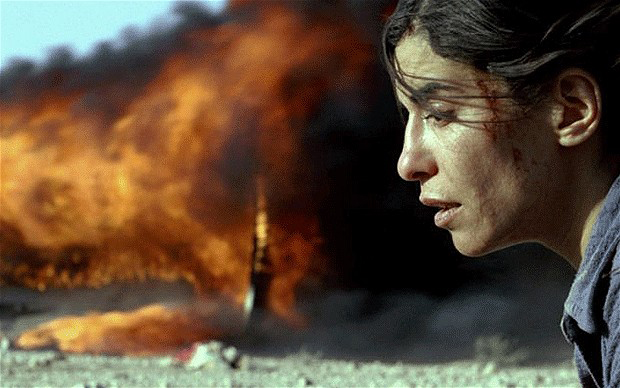
Myths and history that recedes into legend reach us already as palimpsests.  When The Iliad became standardized, the events it recited were already half a millennium old.  Such stories bear all kinds of revisionist tellings, and the more resonant they are the more ways they can be re/told.  If you want to see a really outstanding retelling of Oedípus Rex from Iocáste’s point of view, watch Denis Villeneuve’s film Incendies based on Wajdi Mouawad’s play Scorched.  However, whenever people embed stories in a culture they haven’t lived in and know intimately, I’m wary.  This, incidentally, is true across genres.  For example, I can’t quite trust Martin Cruz Smith’s Russia, although Arkady Renko is a truly stellar creation.  If you read John Fowles’ The Magus side by side with his French Lieutenant’s Woman, the disparity in authenticity is palpable.  Marguerite Yourcenar knew Hellás; Mary Renault, not so much.

There is nothing wrong with writers using other cultures than their own, especially if they’re good storytellers with sensitive antennae.  But when such works are taken for the real thing, the real thing often gets devalued or rejected outright, just as real science gets rejected in SF in favor of notions that are false or obsolete and often duller than the real thing.  It’s like people used to canned orange juice disdaining the freshly squeezed stuff because it contains pulp.  Or like James Ruskin forming his opinion of women’s bodies from classical statues and then struck impotent when he discovered that real women possess pubic hair.

There’s another equivalence between science and non-Anglo cultures in speculative fiction.  Namely, the devil’s in the details.  You need to have absorbed enough of your subject’s essence to know what counts, what needs to be included for verisimilitude.  You may get the large picture right by conscientious research; you may get by with bluffing – but small things give away the game even when the bigger items pass cursory inspection.  The diminutive of Konstantin in Russian is not Kostyn, it’s Kostya.  Hellenic names have vocative endings that differ from the nominative.  The real thing is both more familiar and more alien than it appears in stories written by cultural tourists.  And often it’s the small touches that transport you inside another culture.

When outsiders get things right, they get saluted as honorary members of the culture they chose to depict and deserve the accolade.  Outsiders can sometimes discern things in a culture that embedded insiders cannot see.  Mark Mazower wrote riveting histories of Salonica and my people’s resistance during WWII that I recommend to everyone, including Hellenes.  Roderick Beaton and Paul Preuss wrote absorbing novels set in Crete that are inseparable from their setting (Ariadne’s Children and Secret Passages).  And Ellen Frye’s The Other Sappho may have dated considerably in terms of its outlook – but you can tell that Frye lived in Hellás for a long time and spoke idiomatic Hellenic, whereas Rachel Swirsky’s A Memory of Wind suffers from a generic setting despite its considerable other merits.

Then we have the interesting transpositions, like Jack McDevitt’s A Talent for War.  If you don’t know he’s loosely retelling the wars of the Hellenic city-states against the Persians, you enjoy the story just fine.  But if you do know, the underdrone adds emotional resonance. By knowing Hellenic history past the surface, McDevitt got something else right almost inadvertently: Christopher Sim is a parallel-universe portrait of Áris Velouchiótis, the most famous WWII resistance leader in Hellás.  On the other hand, Ian Sales turned Eurypides’ careful psychological setup into wet cement in Thicker than Water, his SF retelling of Ifighénia in Tavrís (to say nothing of the name changes, with Orris and Pyle for Oréstis and Pyládhis winning the tin ear award).

Previously, the costs and intrinsic distortions of translation stood between stories of other cultures told by their own members and Anglophone readership.  With SF/F writers of other nations increasingly writing in more-than-fluent English, this is no longer the case.  The double-visioned exiles that camp outside the gates of SF/F might be just what the genre needs to shake it out of its self-satisfied monoculture stupor.  The best-known examplar of this is Isak Dinesen (Karen Blixen) whose bewitching stories have never gone out of print, though her Kenyan memoirs have their share of noble savage/colonial glamor problems.  Of course, one swallow does not bring the spring: reading one author per culture won’t result in major shifts; singletons cannot serve as blanket representatives of their culture — they remain individuals with unique context-colored viewpoints.

I think we should encourage cross-fertilization or, to use a biological term, back-breeding to the original stock.  We need to listen to the voices from outside the dominant culture, if we don’t want speculative fiction to harden into drab parochial moulds.  We need to taste the real thing, even if it burns our tongues.  Burt Lancaster (but for the accent) was a memorable Don Fabrizio in the film version of Giuseppe di Lampedusa’s Il Gattopardo; but Ghassan Massoud swept the floor with his Anglo co-stars as Salahu’d-Din in The Kingdom of Heaven.  Although, to be thorough, Salahu’d-Din was a Kurd.  So he might have had blue or gray eyes.

Images: 1st, Peter O’ Toole in another quintessence of palatable exoticism, David Lean’s Lawrence of Arabia;  2nd, Memoirs of Hadrian by Marguerite Yourcenar; 3rd, Lubna Azabal as Nawal Marwan in Villeneuve’s Incendies.

Related entries:

Iskander, Khan Tengri

Being Part of Everyone’s Furniture; Or: Appropriate Away!

A (Mail)coat of Many Colors: The Songs of the Byzantine Border Guards

Evgenía Fakínou: The Unknown Archmage of Magic Realism

Added note:  Almost concurrently, Aliette de Bodard and Cora Buhlert discuss aspects of the same issue.  The synchronicity suggests that the time may be ripe for a change!

The Unknown Archmage of Magic Realism

Thursday, August 11th, 2011

Between long hours at the lab and a bout of lingering illness, I have let the blog go quiet for a while.

However, I haven’t been totally inactive. A year ago, I wrote an essay about the fact that writers feel free to use Hellenic contexts (myths, history, location), blithely assuming they know my culture well enough to do so convincingly. In that essay, I also stated that Hellás may be home to the best magic realist alive right now: Evgenía Fakínou. As a follow-up, I wrote a brief introduction to her work, which appeared today at the SFF Portal helmed by Val Grimm. Here is the conclusion:

“Fakínou’s books are full of vision quests, awakenings, boundary crossings. All have open endings, with their protagonists poised at thresholds on the last page. At the same time, they make their readers whole by reclaiming a past that might have led to an alternative future. Fakínou is a windwalker, a weaver of spider silk. I’m sorry she is not world-famous, but even sorrier for the dreamers who will never get a chance to lose – and find – themselves in her work.”

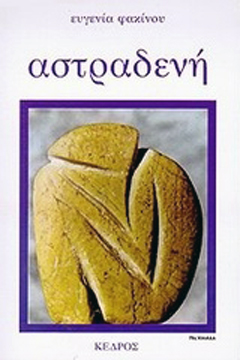
Image: Astradhení (Starbinder), Evgenía Fakínou’s first novel.

The Death Rattle of the Space Shuttle

Monday, July 25th, 2011

I get out of my car,
step into the night,
and look up at the sky.
And there’s something
bright, traveling fast.
Look at it go!
Just look at it go!

Kate Bush, Hello Earth

[The haunting a capella chorus comes from a Georgian folk song, Tsin Tskaro (By the Spring)]

I read the various eulogies, qualified and otherwise, on the occasion of the space shuttle’s retirement.  Personally, I do not mourn the shuttle’s extinction, because it never came alive: not as engineering, not as science, not as a vision.

Originally conceived as a reusable vehicle that would lift and land on its own, the shuttle was crippled from the get-go.  Instead of being an asset for space exploration, it became a liability – an expensive and meaningless one, at that.  Its humiliating raison d’ être was to bob in low earth orbit, becoming a toy for millionaire tourists by giving them a few seconds of weightlessness.  The space stations it serviced were harnessed into doing time-filling experiments that did not advance science one iota (with the notable exception of the Hubble), while most of their occupants’ time was spent scraping fungus off walls.  It managed to kill more astronauts than the entire Apollo program.  The expense of the shuttle launches crippled other worthwhile or promising NASA programs, and its timid, pious politics overshadowed any serious advances to crewed space missions.

In the past, I had lively discussions with Robert Zubrin about missions to Mars (and Hellenic mythology… during which I discovered that he, like me, loves the Minoans).  We may have disagreed on approach and details, but on this he and I are in total agreement: NASA has long floated adrift, directionless and purposeless.  Individual NASA subprograms (primarily all the robotic missions), carried on in the agency’s periphery, have been wildly successful.  But the days when launches fired the imagination of future scientists are long gone.

It’s true that the Apollo missions were an expression of dominance, adjuncts to the cold war.  It’s also true that sending a crewed mission to Mars is an incredibly hard undertaking.  However, such an attempt — even if it fails — will address a multitude of issues: it will ask the tough question of how we can engineer sustainable self-enclosed systems (including the biological component, which NASA has swept under the rug as scientifically and politically thorny); it will allow us to definitively decide if Mars ever harbored life; it will once again give NASA – and the increasingly polarized US polity – a focus and a worthwhile purpose.

I’m familiar with all the counterarguments about space exploration in general and crewed missions in particular: these funds could be better used alleviating human misery on earth; private industry will eventually take up the slack; robotic missions are much more efficient; humans will never go into space in their current form, better if we wait for the inevitable uploading come the Singularity.

In reality, funds for space explorations are less than drops in the ocean of national spending and persistent social problems won’t be solved by such measly sums; private industry will never go past low orbit casinos (if that); as I explained elsewhere, we in our present form will never, ever get our brains/minds into silicon containers; and we will run out of resources long before such a technology is even on our event horizon, so waiting for gods… er, AI overlords won’t avail us.

Barring an unambiguous ETI signal, the deepest, best reason for crewed missions is not science. I recognize the dangers of using the term frontier, with all its colonialist, triumphalist baggage. Bravado aside, we will never conquer space. At best, we will traverse it like the Polynesians in their catamarans under the sea of stars. But space exploration — more specifically, a long-term crewed expedition to Mars with the express purpose to unequivocally answer the question of Martian life — will give a legitimate and worthy outlet to our ingenuity, our urge to explore and our desire for knowledge, which is not that high up in the hierarchy of needs nor the monopoly of elites. People know this in their very marrow – and have shown it by thronging around the transmissions of space missions that mattered.

It’s up to NASA to once again try rallying people around a vision that counts.  Freed of the burden of the shuttle, perhaps it can do so, thereby undergoing a literal renaissance.

“We choose to go to the moon in this decade and do the other things, not because they are easy, but because they are hard, because that goal will serve to organize and measure the best of our energies and skills, because that challenge is one that we are willing to accept, one we are unwilling to postpone, and one which we intend to win.”

John Fitzgerald Kennedy, September 1962

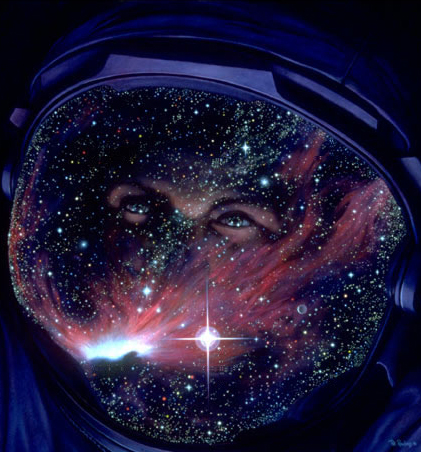
Images: Pat Rawlings, Beyond; Randy Halverson, Plains Milky Way; European Space Agency, High Aurora.

The Sheep Look Up

Saturday, June 25th, 2011

Some will rob you with a six-gun
And some with a fountain pen.

Woody Guthrie, from Pretty Boy Floyd

I will not go into detail about the situation in Greece. The Guardian’s columnists have been covering it decently, given their distance from the source. Closer up so has The Press Project, whose documentary DebtOcracy puts the entire thing into perspective, showing up the contortions of the European Central Bank and the International Money Fund for what they are: attempts to safeguard large banks and their owners from any risks they incurred in the pursuit of exorbitant profits at the expense of societies and people.

I’m no blind patriot. I know what portion of this has come from bad internal policies and habits. Even so, I’m proud that my people are demonstrating non-stop, saying “Ohi!” (No) to the new occupiers-to-be just as they said it to the Italians and Germans when they demanded unconditional surrender. It is a source of great grief to me that my father, who was part of the resistance to the invaders and then helped rebuild the devastated country bit by hard-won bit as one of its most prominent engineers, will most likely leave life when his nation is at such a state.

I will leave you with a famous Cretan call to rebellion, sung by Nikos Ksilouris: “When will the skies clear, so we see the stars?” The people sang it before the Athens Parliament building.  Because humans need bread and roses — and recognize slavery when they see it, no matter what those in power call it.

Images: Acropolis moonrise (Antónis Ayiomamítis); protests in Syntagma (Constitution) Square in front of the Parliament building, Athens, June 2011 (Oréstis Panayótou).

A Plague on Both Your Houses – Reprise

Saturday, May 28th, 2011

Note: This article originally appeared in the Apex blog, with different images. The site got hacked since then and its owner did not feel up to reconstituting the past database.  I reprint it as a companion piece to Sam Kelly’s Privilege and Fantasy.

Don’t you know
They’re talkin’ ’bout a revolution
– Tracy Chapman

In James Tiptree’s “Houston, Houston, Do You Read?” three male astronauts are thrown forward in time and return to an earth in which an epidemic has led to the extinction of men. They perceive a society that needs firm (male) guidance to restore correct order and linear progress. In fact, the society is a benevolent non-coercive non-hierarchical anarchy with adequate and stable resources; genetic engineering and cloning are advanced, spaceships are a given, there’s an inhabited Lunar base and multiple successful expeditions to Venus and Mars. One of the men plans to bring the women back under god’s command (with him as proxy) by applying Pauline precepts. Another plans to rut endlessly in a different kind of paradise. The women, after giving them a long rope, decide they won’t resurrect the XY genotype.

The skirmish in the ongoing war about contemporary fantasy between Leo Grin and Joe Abercrombie reminds me of Tiptree’s story. Grin and Abercrombie argued over fantasy as art, social construct and moral fable totally oblivious to the relevant achievements of half of humanity – closer to ninety percent, actually, when you take into account the settings of the works they discussed. No non-male non-white non-Anglosaxon fantasy writers were mentioned in their exchanges and in almost all of the reactions to their posts (I found only two partial exceptions).

I expected this from Grin. After all, he wrote his essay under the auspices of Teabagger falsehood-as-fact generator Andrew Breitbart. His “argument” can be distilled to “The debasement of heroic fantasy is a plot of college-educated liberals!” On the other hand, Abercrombie’s “liberalism” reminds me of the sixties free-love dictum that said “Women can assume all positions as long as they’re prone.” The Grin camp (henceforth Fathers) conflates morality with religiosity and hearkens nostalgically back to Tolkien who essentially retold Christian and Norse myths, even if he did it well. The Abercrombie camp (henceforth Sons) equates grittiness with grottiness and channels Howard – incidentally, a basic error by Grin who put Tolkien and Howard in the same category in his haste to shoehorn all of today’s fantasy into the “decadent” slot. In fact, Abercrombie et al. are Howard’s direct intellectual descendants, although Grin’s two idols were equally reactionary in class-specific ways. Fathers and Sons are nevertheless united in celebrating “manly” men along the lines demarcated by Tiptree.

As I’ve said elsewhere, I enjoy playing RPGs in many guises. But even for games – let alone for reading – I prefer constructs that are nuanced and, equally importantly, worlds in which I can see myself living and working. Both camps write stories set in medieval worlds whose protagonists are essentially Anglosaxon white men with a soupçon of Norse or Celt to spice the bland gruel. To name just a few examples, this is true of Tolkien’s Middle Earth, Howard’s Conan stories, Moorcock’s Elric saga, Leiber’s Fafhrd series, Jordan’s Wheel of Time toe-bruisers, Martin’s fast-diminishing-returns Fire and Ice cycle. The sole difference is approach, which gets mistaken for outlook. If I may use po-mo terms, the Fathers represent constipation, the Sons diarrhea; Fathers the sacred, Sons the profane – in strictly masculinist terms. In either universe, women are deemed polluting (that is, distracting from bromances) or furniture items. The fact that even male directors of crowd-pleasers have managed to create powerful female heroes, from Jackson’s Éowyn to Xena (let alone the women in wuxia films), highlight the tame and regressive nature of “daring” male-written fantasy.

Under the cover of high-mindedness, the Fathers posit that worthy fantasy must obey the principles of abrahamic religions: a rigid, stratified society where everyone knows their place, the color of one’s skin determines degree of goodness, governments are autocratic and there is a Manichean division between good and evil: the way of the dog, a pyramidal construct where only alpha males fare well and are considered fully human. The Sons, under the cover of subversive (if only!) deconstruction, posit worlds that embody the principles of a specific subset of pagan religions: a society permanently riven by discord and random cruelty but whose value determinants still come from hierarchical thinking of the feudal variety: the way of the baboon, another (repeat after me) pyramidal construct where only alpha males fare well and are considered fully human. Both follow Campbell’s impoverished, pseudo-erudite concepts of the hero’s quest: the former group accepts them, the latter rejects them but only as the younger son who wants the perks of the first-born. Both think squarely within a very narrow box.

Other participants in this debate already pointed out that Tolkien is a pessimist and Howard a nihilist, that outstanding earlier writers wrote amoral works (Dunsany was mentioned; I’d add Peake and Donaldson) and that the myths which form the base of most fantasy are riddled with grisly violence. In other words, it looks like Grin at least hasn’t read many primary sources and both his knowledge and his logic are terminally fuzzy, as are those of his supporters.

A prominent example was the accusation from one of Grin’s acolytes that contemporary fantasy is obsessed with balance which is “foreign to the Western temperament” (instead of, you know, ever thrusting forward). He explicitly conflated Western civilization with European Christendom, which should automatically disqualify him from serious consideration. Nevertheless, I will point out that pagan Hellenism is as much a cornerstone of Western civilization as Christianity, and Hellenes prized balance. The concept of “Midhén ághan” (nothing in excess) was crucial in Hellenes’ self-definition: they watered their wine, ate abstemiously, deemed body and mind equally important and considered unbridled appetites and passions detriments to living the examined life. At the same time, they did not consider themselves sinful and imperfect in the Christian sense, although Hellenic myths carry strong strains of defiance (Prometheus) and melancholy (their afterworld, for one).

Frankly, the Grin-Abercrombie fracas reminds me of a scene in Willow. At the climax of the film, while the men are hacking at each other down at the courtyard, the women are up at the tower hurling thunderbolts. By the time the men come into the castle, the battle has been waged and won by women’s magic.

So enough already about Fathers and Sons in their temples and potties. Let’s spend our time more usefully and pleasantly discussing the third member of the trinity. Before she got neutered, her name was Sophia (Wisdom) or Shekinah (Presence). Let’s celebrate some people who truly changed fantasy – to its everlasting gain, as is the case with SF.

My list will be very partial and restricted to authors writing in English and whose works I’ve read, which shows we are dealing with an embarrassment of riches. I can think of countless women who have written paradigm-shifting heroic fantasy, starting with Emily Brontë who wrote about a world of women heroes in those tiny hand-sewn diaries. Then came trailblazers Catherine Moore, Mary Stewart and André Norton. Ursula Le Guin’s Earthsea is another gamechanger (although her gender-specific magic is problematic, as I discussed in Crossed Genres) and so is her ongoing Western Shores series. Katherine Kurtz’s Deryni cycle is as fine a medieval magic saga as any. We have weavers of new myths: Jane Yolen, Patricia McKillip, Meredith Ann Pierce, Alma Alexander; and tellers of old myths from fresh perspectives: Tanith Lee, Diana Paxson, Marion Zimmer Bradley, Terri Windling, Emma Bull, C. J. Cherryh, Christine Lucas.

Then there’s Elizabeth Lynn, with her Chronicles of Tornor and riveting Ryoka stories. Marie Jakober, whose Even the Stones have haunted me ever since I read it. Elizabeth Marshall Thomas, whose heroic prehistoric fantasies have never been bested. Jacqueline Carey, who re-imagined the Renaissance from Eire to Nubia and made a courtesan into a swashbuckler in the first Kushiel trilogy, showing a truly pagan universe in the bargain. This without getting into genre-cracking mythmakers like Isak Dinesen (Karen Blixen) and Louise Erdrich.

These authors share several attributes: they have formidable writing skills and honor their sources even as they transmute them. Most importantly, they break the tired old tropes and conventional boundaries of heroic fantasy and unveil truly new vistas. They venture past medieval settings, hierarchical societies, monotheistic religions, rigid moralities, “edgy” gore, Tin John chest beatings, and show us how rich and exciting fantasy can become when it stops being timid and recycling stale recipes. As one of the women in Tiptree’s “Houston, Houston” says: “We sing a lot. Adventure songs, work songs, mothering songs, mood songs, trouble songs, joke songs, love songs – everything.”

Everything.

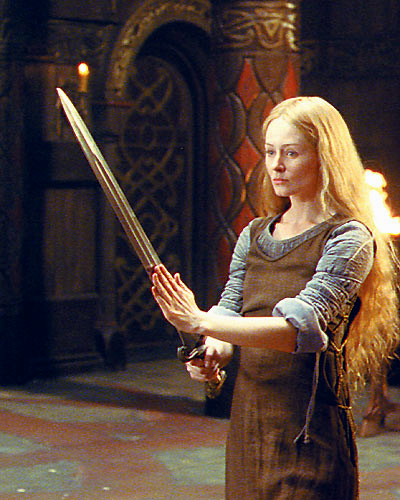
Images: Éowyn, shieldmaiden of Rohan (Miranda Otto) in The Two Towers; Sonja, vampire paladin (Rhona Mitra) in Rise of the Lycans; Yu Shu Lien, Wudan warrior (Michelle Yeoh) in Crouching Tiger, Hidden Dragon.

Area 51: Teen Commies from Outer Space!

Thursday, May 19th, 2011

(with due props to Douglas Kenney, National Lampoon co-founder)

Driving to work earlier this week, I heard Terry Gross of Fresh Air (NPR) interview Annie Jacobsen about her new book, Area 51: An Uncensored History of America’s Top Secret Military Base. Jacobsen is a national security reporter, which means she is used to facing stonewalling and secrecy and therefore well aware that she must triple-check her information. It all sounded like sober investigative reporting, until it got to the coda. Bear with me, grasshoppahs, because the truth is definitely way out there.

As you know, Bobs, Area 51 is a military installation in Nevada next to the Yucca Flats where most of the US nuclear tests have been conducted. Area 51 was the home of the U-2 and Oxcart military aircraft testing programs and its resident experts appear to have reverse-engineered Soviet MiGs. Some conspiracy lovers opine that the lunar landing was “faked” there. Not surprisingly, its specifics are heavily classified, including an annually-renewed presidential EPA exception to disclosing (ab)use of toxic agents. People in the ostensibly free world can’t even get decent aerial pictures of it — which of course did not deter satellites of other nations, but who cares for rationality where national security is concerned?

To UFO believers, Area 51 is also the facility that analyzed whatever crashed near Roswell in 1947. Which is where Jacobsen’s theory comes in, backed by a single anonymous source. She proposes that the Roswell object was neither a weather balloon nor an alien spacecraft but a remotely flown Soviet craft based on prototypes by the Horten brothers, aircraft designers and Nazi party members. This part is old news, since this possibility was already considered in cold war US investigations.

Jacobsen’s addition (asserted with a completely straight face and demanding to be taken seriously) is that this craft contained “genetically/surgically altered” teenagers engineered by Josef Mengele at the command of that other monstrous Joseph, Stalin. The modifications had produced uniform results of “abnormally large heads and eyes” etc. The goal was to scare the US and weaken its defenses by a repetition of the panic created by Orson Welles’ War of the Worlds 1938 broadcast.

Got that? I can safely bet that Hollywood agents are bidding frantically for the rights to the screenplay even as we speak. And so they should — it’s a guaranteed blockbuster. It has everything: UFOs, Nazis, Frankenstein monsters, government conspiracies… It ties so many loose ends together so neatly that it’s irresistible.

I will leave to other experts the issues of quoting a single anonymous source and the previous debunkings of similar Area 51 “insiders” like Robert Lazar et al. The part that made me laugh out loud was the “genetically/surgically altered” cherry on top of that fabulous cake. To her credit, Gross pressed Jacobsen on this, only to get a rewinding of the tape without any real explanation beyond “I trusted my Cigarette-Smoking Man because I spent two years talking to him.”

For those who don’t live in a parallel universe, the fact that DNA is the carrier of heredity for most terrestrial lifeforms was established in the fifties, which (*counting on my fingers*) came after 1947. So Mengele or anyone else could not have engaged in any form of targeted genetic engineering; that only became possible, in its crudest form, in the eighties. If “genetic” is intended to mean plain ol’ interbreeding, humans take a bit more than two years (the interval from the time the Russians walked into Berlin till the Roswell crash) to 1) produce children, 2) have the children grow into teenagers and, just as crucially, 3) reliably reproduce traits.

Starvation or breaking of bones during childhood can lead to stunting (as Toulouse-Lautrec’s case demonstrates) but I know of no surgery that can increase head size — hydrocephalus kills its sufferers in rather short order. Grafting was so primitive back then that it’s unlikely its recipients would have survived long enough for a transatlantic trip. The only scenario I can envision that would result to anything remotely tangential to Jacobsen’s contention is if the Soviets used youngsters suffering from growth factor or growth hormone deficiencies — genetic conditions that arise without the intervention of experimentation.

Don’t misunderstand me, I know the idiocies that military and “intelligence” agencies are capable of — from marching soldiers to ground zero well after the consquences of radioactive fallout had become obvious, to the frightening abuses of MK-ULTRA, to the Stargate “Jedi warriors” who stared at spoons and goats. But all these are extensively documented, as well as compatible with the technology available at the time they occurred. Jacobsen’s theory is as grounded as the alien craft alternative it purports to debunk. Pity that Gross didn’t invite a biology undergrad to the program.

My theory (and I’ll be happy to talk to Hollywood agents about it) is that the engineered youngsters decided to defect, commandeered the craft and crashed it while drunk on freedom and contraband beer. I even have my own impeccable source: the small store owner at the outskirts of Roswell who sold them the beer. Smoking Parodies and drinking his regular shot of Colt 45 from an oil can, he confided wistfully: “They just wanted to see the Vegas shows, like any kid their age.”

Images: top, Independence Day — the alien craft secreted and reverse-engineered in Area 51; bottom, another possible explanation for the Roswell crash: abduction lesson troubles (from Pixar’s Lifted).

What’s Sex Got to Do with It?

Tuesday, May 17th, 2011

(sung to Tina Turner’s à propos catchy tune)

Two events unfolded simultaneously in the last few days: Arnold Schwarzenegger’s admission that he left a household servant with a “love child” and Dominique Strauss-Kahn’s arrest for attempting to rape a hotel maid. Before that, we had the almost weekly litany of celebrity/tycoon/politician/figurehead caught with barely-of-age girl(s)/boy(s). In a sadly familiar refrain, an ostensibly liberal commentator said:

“…we know that powerful men do stupid, self-destructive things for sexual reasons every single day. If we’re looking for a science-based explanation, it probably has more to do with evolutionarily induced alpha-male reproductive mandates than any rational weighing of pros and cons.”

Now I hate to break it to self-labeled liberal men but neither love nor sex have anything to do with sexual coercion and Kanazawa-style Tarzanism trying to pass for “evolutionary science” won’t cut it. Everyone with a functioning frontal cortex knows by now that rape is totally decoupled from reproduction. The term “love child”, repeated ad nauseam by the media, is obscene in this context.

Leaving love aside, such encounters are not about sex either. For one, coerced sex is always lousy; for another, no reproductive mandate is involved, as the gang rapes of invading armies show. What such encounters are about, of course, is entitlement, power and control: the prerogative of men in privileged positions to use others (women in particular) as toilet paper with no consequences to themselves short of the indulgent “He’s such a ladies’ man…” and its extension: “This was a trap. Such men don’t need to rape. Women fling themselves in droves at alpha males!”

As I keep having to point out, there are no biological alpha males in humans no matter what Evo-Psycho prophet-wannabees preach under the false mantra of “Real science is not PC, let the chips fall where they may”. Gorillas have them. Baboons have them, with variances between subgroups. Our closest relatives, bonobos and chimpanzees, don’t. What they have are shifting power alliances for both genders (differing in detail in each species). They also have maternally-based status because paternity is not defined and females choose their partners. Humans have so-called “alpha males” only culturally, and only since hoarding of surplus goods made pyramidal societies possible.

The repercussions of such behavior highlight another point. Men of this type basically tell the world “I dare you to stop my incredibly important work to listen to the grievances of a thrall. What is the life and reputation of a minimum-wage African immigrant woman compared to the mighty deeds I (think I can) perform?” Those who argue that the personal should be separate from the political choose to ignore the fact that the mindset that deems a maid part of the furniture thinks the same of most of humanity — Larry Summers is a perfect example of this. In fact, you can predict how a man will behave in just about any situation once you see how he treats his female partner. This makes the treatment of nations by the IMF and its ilk much less mysterious, if no less destructive.

Contrary to the wet dreams of dorks aspiring to “alpha malehood”, women generally will only interact with such specimens under duress. They’re far more popular with men who (like to) think that being a real man means “to crush your enemies, see them driven before you, and to hear the lamentation of their women.” Civilization came into existence and has precariously survived in spite of such men, not because of them. If we hope to ever truly thrive, we will have to eradicate cultural alpha-malehood as thoroughly as we did smallpox — and figure out how we can inculcate snachismo as the default behavioral model instead.

Images: Top, Malcolm McDowell as Caligula in the 1979 eponymous film; bottom, Biotest’s “Alpha Male” pills.

Privilege and Fantasy

Saturday, May 14th, 2011

by Sam Kelly

This is the companion piece to Sam’s Nostalgia. The questions he raises bring to mind some of the haunting works of Isak Dinesen (Karen Blixen), most notably Sorrow-Acre in Winter’s Tales.

In my last essay, I talked about two forms of nostalgia, and the characterization of History within fantasy texts. This time around, it’s time for an assertion: it’s much harder for the privileged classes to write literary fantasy than it is for the oppressed and marginalized.

Let’s start with some definitions (do feel free to take issue with them in the comments—I’m not going to be ideological about them):

Literary: of enduring worth; of complexity; supporting multiple disparate readings; possessing novelty or making an original contribution. Layered and polysemous enough that it isn’t immediately accessible in its entirety. Possessing an awareness of itself as a text.

Fantasy: That Which Is Not: a change in the philosophical and/or metaphysical nature of the world, which I’ll tentatively call a diversa after Suvin’s “novum”. A desideratum, or an elegy. Passion is a necessary and perhaps sufficient condition for fantasy; there are some unpleasant words for fantasy without passion. Popular trope fantasy is perhaps the apotheosis of advertising, without any product. It’s normally impossible to tell it from pisstake fantasy.

Privileged: Possessing something inherited or innate that makes life easier for them than most people, and, in general, not aware that this makes a difference. Tending to ascribe their success entirely to hard work or luck. Generally, in the case of fantasy writers, it means “middle-class white cis urban-dwelling Western/minority-world men whose first language is English, and who aren’t disabled”, and it covers most of them.

One of the fundamental aspects of privilege is that it allows you to remain isolated from life, to an extent that others can’t. Write, as They say, what you know.

It is difficult to be sat upon all day, every day, by some other creature, without forming an opinion about them. On the other hand, it is perfectly possible to sit all day, every day, on top of another creature and not have the slightest thought about them whatsoever. — Dirk Gently’s Holistic Detective Agency, regarding horses.

Worlds are complex; even the kind that are only written about must, of necessity, contain multitudes. If one aspires to realism, or even to plausibility (which I find much more palatable in fantastika generally) then one must also know, and write, multitudes.

Knowing things is easy. What’s hard, and unusual, is wanting to know things that don’t directly affect you; being aware that there are questions, and that the questions are important. Writers are better at curiosity than most, but that doesn’t mean they’re better at knowing which questions to ask. So there’s only really one way to train that into someone: teach them that there are difficult, and important, things going on around them. Things that they don’t understand, things that people don’t want to teach them, things people have a vested interest in keeping from them.

One of the biggest examples of that—fittingly for fantasy, given how rooted in place & belonging it always is—is land. Who owns the land? Whose ancestors owned the land? Is talking about land in terms of ownership always useful? Who gets to name the land? Who has what resource rights in the land? And, crucially: who knows the histories of the land? (Disclaimer: my examples are drawn from British history, because that’s what I know.)

Narrative and naming are almost always the property of the privileged classes—not the ruling classes, because those tend to be much smaller—and are unchallenged in the popular narrative. Well, I say unchallenged. Alternative narratives tend to be subjected to the usual erasure & marginalization, because the unmarked nature of the privileged classes means that (by definition) no alternative is plausible. (Unmarked: seen as “normal”, ie. people & disabled people, people & people of color, people & gay people, people & poor people…)

The two aspects of privilege combine interestingly around the issue of the legible land; the privileged classes may hold property rights in it, but they’re very rarely experts on it, or strongly emotionally invested. Many of the land-owners we see in fantasy books are… but they’re usually invested in the picturesque or the monetary aspects, not the economic or ecological ones. And, as always, the frequency of representation in literature is no guide to reality! Fundamentally, being rich means you still eat that day if you go home without a rabbit and that all you need to know about wheat or cabbage is that the brown end goes in the ground, the other end goes in your stomach, and there are some boring processes in the middle which peasants and women deal with.

Being poor, on the other hand—or otherwise marginalized and reduced in scope—means you develop an intimate understanding of the means of production. This isn’t a symmetrical thing: it’s not that privileged people understand one set of things and non-privileged people understand another. People who have lacked privilege really do have a closer and more urgent understanding of life, being closer to the sharp end of the System. NB: I’m distinguishing experiences and understandings from the results of formal education here—obviously they overlap to an extent, but the infamous ivory tower phenomenon shows that formal education can have entirely the opposite effect.

(Food, of course, isn’t the only thing that the land gives us. There’s another, equally important resource: stories. Whether it’s stories about the time Ellis Gwyn lost two fingers to a tractor engine, or about Rhiannon easily outpacing Pwyll’s hounds, one of the most important things is that they happened Right There. There’s a whole long strand here, waiting to be unravelled, about fantasy, social mobility, and the motif of travel in portal-quest stories. But that’s for another time.)

Under the definition of “literary” above, I talked about novelty & original contributions. Here, we get to invoke Sturgeon’s Law, and I can point out that the only reason the good stuff looks so good is by comparison & contrast to the masses of tedious pabulum surrounding it. Nothing can be original or different unless there’s a mainstream to swim across, and the people who tend to swim across it are the ones whose whole life experience points them in other directions. As far as “awareness of itself as a text” goes, the World Is Text, this one and all others. Taking the text at face value is a luxury privileged people have. As for layers and multiple meanings… the idea that events & ontologies may be interpreted in several different ways is brain-bendingly difficult to internalize if you start off with the luxury of unopposed certainty. However, if you have it rubbed into you every day that you are not like other people, that normal people see the world differently and get different things from the world, then the wave/particle dualities of histories are easy by comparison.

So that’s “literary”, and as an illustration: without stopping to think, make a list of ten or a dozen 18th & 19th century novelists. How many of the list are women? Do you think the proportion is an accurate reflection of how many men & women were writing at the time?

As far as fantasy goes, that one’s easy to deal with. If you passionately want the world to be different, then you’re probably less than happy with the way of things as it is. As I talked about in “The time-binding of nostalgia”, there are two ways to desire change. You can either look forward to a golden time, or look back to a golden time. The first is a perfectly normal act of imagination, but the second always involves a regurgitated lump of plastic history and a covert appeal to the idea that things were always like that, but the forces of Darkness recently changed things away from their true course. You’re probably thinking of Tolkien as an example here, which is superficially reasonable—however, the Professor’s history is deliberately self-problematizing, including as it does its own historiography, and The Lord of the Rings is not even slightly a desideratum in that sense. It’s entirely elegiac, an extended if-only-it-could-have-been.

Of course, if you aren’t passionate about your fantasy, if you’re only proposing a diversa because it’s a vaguely interesting idea or because you need some stage setting for your Awesome Characters and Plot of Awesomeness, then that’s fluff. There’s nothing wrong with fluff, so long as it acknowledges that that’s what it is.

Another frequent failure mode is where the only diversa is that for every epic problem there is an equally epic solution, and the status quo ante is restored. This is a lazy and slapdash way to construct the framework for a story, but it’s unfortunately very common amongst privileged Extruded Fantasy Product writers. A well-constructed diversa, on the other hand, narrativises the textual world by introducing crosslinks, structural rhymes, and reified metaphors, and it’s easier to think about these—to acknowledge the possibility of them, to imagine a world with innate meaning—if you haven’t had the blithely unthinking benefit of the real world’s equivalent all your life.

This is not to say that any of these things—being female, or nonwhite, or trans, or poor, or far from urban life, or disabled, or any of the many other ways of lacking privilege—gives an author a free pass to Literary Fantasist status, or that privilege forbids it; all three concepts (literature, fantasy, and privilege) are far too complex and intersectional to be reduced to those sorts of rules. But privilege does make it harder to achieve.

Images: 1st, Mingary Castle, photo by Sam Kelly; 2nd, Rogue Roman by Frank Frazetta; 3rd, Helena Bonham Carter and Mark Wahlberg in Tim Burton’s Planet of the Apes.

The Time-Binding of Nostalgia

Saturday, May 7th, 2011

by Sam Kelly (with an afterword by Athena)

It is my great pleasure to reprint an essay by my friend Sam Kelly (aka Eithin — Cymraeg for Gorse) who blogs at Cold Iron and Rowan-Wood. Sam was born to theatre folk and engineers, and brought up in the Essex woodlands and the Welsh mountains. Disability cut short a PhD in nanomaterials chemistry; he now lives in London, where he writes about fantastika and makes art.

I’ve been reading a lot of Guy Gavriel Kay recently (Under Heaven, The Wandering Fire, The Darkest Road, and The Lions of Al-Rassan) and have therefore naturally been thinking about identity, passion, and pride.

It’s a commonly accepted trope amongst many fantasy critics, scholars, and commenters that fantasy is, at its root, about nostalgia. I’ve never quite agreed with this, but I think that’s partly because nostalgia comes in several flavours. The word comes from the Greek nostos, a homecoming, and algos, pain, and was coined as a medical term in 1688 to describe Swiss mercenaries’ longing for the mountains of their home. (As a Welshman, I can relate to that! The Welsh word hiraeth is mostly untranslatable, but Heimweh does seem like a cultural analogue.)

In recent decades, however (and especially by the English) it’s been coopted to describe a kind of early 20th century idyll. You know the one—ploughmen, foaming nut-brown ale, small children waving at steam trains, The Countryside or The Beach two hours’ journey away, a distinct lack of brown people. It’s basically thinly disguised neo-mediaevalism, or rather neo-mediaevalism (in fantasy writers of a certain age, at least) is a proxy for their yearning for the kind of social certainty that supposedly existed in the recent past.

I feel compelled to point out here that that past (either of those pasts) never really existed, and the only way to pretend that they did is by wholesale erasure of the experiences and histories of women, the working classes, nonwhite people (there have always been nonwhite people in Britain, at least back to the Romans if not before) and Jews. Not to mention (and people rarely do mention) those who are more than one of those. It’s fairly safe to blame the Victorians for making up the mediaeval idyll. We’ve been reimagining recent history ever since, and it’s not as though revisionist history started in 1820 for that matter, but it was the Victorians who pioneered the mass production of History.

So that’s one way in which nostalgia is expressed in English-language fantasy fiction: the desire for an imagined past. That can be a joyful escapist wish, as with William Morris, or a heartfelt elegy for something that could never have been, as with Tolkien. In either version, the past (in the context of the novel, ie. the created world’s own imagined past) is seen explicitly as a good thing, a lost Golden Age.

There’s another version of nostalgia, however—nostalgia in its most etymologically strict sense, the pain of longing for a homecoming—and that is the one experienced by those whose home is contested, denied, erased. The interesting thing about that is that in the latter, the past-within-the-text is usually unpleasant, problematized, or generally Not Even Slightly Golden.

Athena’s afterword: There is a third group that experiences nostalgia – those who have left home (mostly) voluntarily and live as perpetual exiles, outsiders to both natal and adopted cultures, a shard of thick glass between our hearts and our words. For those who walk between worlds, home is what we carry in our heads. Even the worlds we remember never existed or no longer exist and we are feral orphans who press our faces against others’ lit windows. If we ever return home, it does not recognize us – and we are more like Angelopoulos’ Odysseus than Homer’s.

Black Swallow — a folksong of exile from Thrace, sung by Hrónis Aidhonídhis (“Son of the Nightingale”). Click on the title to listen:

My black swallow from afar,
my white dove from home,
you fly so high! Come lower
and open your wings,
so I can write to my mother,
my sisters — and my love.

And the lament of those left behind: the famous Tzivaéri mou (“My Treasure”) from the Dodecanese, sung by Dhómna Samíou.

Images: 1st, Oleg Yankovsky in Andrei Tarkovsky’s Nostalghia; 2nd, Harvey Keitel in Theódoros Angelópoulos’ The Gaze of Odysseus.

Blastocysts Feel No Pain

Monday, March 14th, 2011

In 2010, the recipient for the Medicine Nobel was Robert Edwards, who perfected in vitro fertilization (IVF) techniques for human eggs in partnership with George Steptoe. Their efforts culminated with the conception of Louise Brown in 1978, followed by several million such births since. The choice was somewhat peculiar, because this was an important technical advance but not an increase in basic understanding (which also highlights the oddity of not having a Nobel in Biology). That said, the gap between the achievement and its recognition was unusually long. This has been true of others who defied some kind of orthodoxy – Barbara McClintock is a poster case.

In Edwards’ case, the orthodoxy barrier was conventional. Namely, IVF separates sex from procreation as decisively as contraception does. Whereas contraception allows sex without procreation (as do masturbation and most lovemaking permutations), IVF allows conception minus orgasms and also decouples ejaculation from fatherhood. Sure enough, a Vatican representative voiced his institution’s categorical disapproval for this particular bestowal. However, IVF has detractors even among the non-rabidly religious. The major reason is its residue: unused blastocysts, which are routinely discarded unless they’re used as a source for embryonic stem cells.

Around the same time that Edwards received the Nobel, US opponents of embryonic stem cell research filed a lawsuit contending that this “so far fruitless” research siphoned off funds from “productive” adult stem cell research. The judge in the case handed down a decision that amounted to a ban of all embryonic stem cell work and the case has been a legal and political football ever since. The brouhaha has highlighted two questions: what good are stem cells? And what is the standing of blastocysts?

Let me get the latter out of the way first. Since IVF blastocysts are eventually discarded if not used, most dilemmas associated with them reek with hypocrisy and the transparent desire to curtail women’s autonomy. A 5-day blastocyst consists of 200 cells arising from a zygote that has not yet implanted. If it implants, 50 of these eventually become the embryo; the rest turn into the placenta. A blastocyst is a potential human as much as an acorn is a potential oak – perhaps even less, given how much it needs to attain viability. Equally importantly, blastocysts don’t feel pain. For that you need to have a nervous system that can process sensory input. In humans, this happens roughly near the end of the second trimester – which is one reason why extremely premature babies have severe neurological defects.

This won’t change the mind of anyone who believes that a zygote is “ensouled” at conception, but if we continue along this axis (very similar to much punitive fundamentalist reasoning) we will end up declaring miscarriage a crime. This is precisely what several US state legislatures are currently attempting to do, with the “Protect Life Act” riding pillion, bringing us squarely into Handmaid’s Tale territory. It is well known by now that something like forty percent of all conceptions end in early miscarriages, many of them unnoticed or noticed only as heavier than usual monthly bleeding. A miscarriage almost invariably means there is something seriously wrong with the embryo or the embryo/placenta interaction. Forcing such pregnancies to continue would result in significant increase of deaths and permanent disabilities of both women and children.

The “instant ensoulment” stance is equivalent to the theories that postulated a fully formed homunculus inside each sperm and deemed women passive yet culpable vessels. It is also noteworthy that the concern of compulsory-pregnancy advocates stops at the moment of birth. Across eras, girls have been routinely killed at all ages by exposure, starvation, poisoning, beatings; boys suffered this fate only if they were badly deformed in cultures or castes that demanded physical perfection.

Let’s now focus on the scientific side. By definition, stem cells must have the capacity to propagate indefinitely in an undifferentiated state and the potential to become most cell types (pluripotent). Only embryonic stem cells (ESCs) have these attributes. Somatic adult stem cells (ASCs), usually derived from skin or bone marrow, are few, cannot divide indefinitely and can only differentiate into subtypes of their original cellular family (multipotent). In particular, it’s virtually impossible to turn them into neurons, a crucial requirement if we are to face the steadily growing specter of neurodegenerative diseases and brain or spinal cord damage from accidents and strokes.

Biologists have discovered yet another way to create quasi-ESCs: reprogrammed adult cells, aka induced pluripotent cells (iPS). However, it comes as no surprise that iPS have recently been found to harbor far larger numbers of mutations than ESCs. To generate iPS, you need to jangle differentiated cells into de-differentiating and resuming division. The chemical path is brute-force – think chemotherapy for cells and you get an inkling. The alternative is to introduce an activated oncogene, usually via a viral vector. By definition, oncogenes promote cell division which raises the very real prospect of tumors. Too, viral vectors introduce a host of uncontrolled variables that have so far precluded fine control.

ESCs are not tampered with in this fashion, although long-term propagation can cause epi/genetic changes on its own. Additionally, recent advances have allowed researchers to dispense with mouse feeder cells for culturing ESCs. These carried the danger of transmitting undesirable entities, from inappropriate transcription factors to viruses. On the other hand, ASC grafts from one’s own tissues are less likely to be rejected (though xeno-ASCs are even likelier than ESCs to be tagged as foreign and destroyed by the recipient’s immune system).

Studies of all three kinds of stem cells have helped us decipher mechanisms of both development and disease. This research allowed us to discover how to enable cells to remain undifferentiated and how to coax them toward a desired differentiation path. Stem cells can also be used to test drugs (human lines are better indicators of outcomes than mice) and eventually generate tissue for cell-based therapies of birth defects, Alzheimer’s, Parkinson’s, Huntington’s, ALS, spinal cord injury, stroke, diabetes, heart disease, cancer, burns, arthritis… the list is long. Cell-based therapies have advantages over “naked” gene delivery, because genes delivered in cells retain the regulatory signals and larger epi/genetic contexts crucial for long-term survival, integration and function.

People argue that ASCs (particularly hematopoetic precursors used in bone marrow transplants) have been far more useful than ESCs, whose use is still potential. However, they usually fail to note that ASCs have been in clinical use since the late fifties, whereas human ESCs were first isolated in 1998 by James Thomson’s group in Wisconsin. Add to that the various politically or religiously motivated embargoes, and it’s a wonder that our understanding of ESCs has advanced as much as it has.

Despite fulminations to the contrary, women never make reproductive decisions lightly since their repercussions are irreversible, life-long and often determine their fate. Becoming a human is a process that is incomplete even at birth, since most brain wiring happens postnatally. Demagoguery may be useful to lawyers, politicians and control-obsessed fanatics. But in the end, two things are true: actual humans are (should be) much more important than potential ones – and this includes women, not just the children they bear and rear; and embryonic stem cells, because of their unique properties, may be the only path to alleviating enormous amounts of suffering for actual humans.

Best FAQ source: NIH stem cell page

A Plague on Both Your Houses

Friday, February 25th, 2011

Dwellers of the SF/F community may be aware of the recent debate about contemporary fantasy between Leo Grin and Joe Abercrombie.  They and their followers argue over fantasy as art, social construct and moral fable totally oblivious to the relevant achievements of half of humanity -– closer to ninety percent, actually, when you take into account the settings of the works they discuss.  I wrote an article about the topic which just appeared at the Apex blog [update note: the Apex site was hacked, so I reprised the essay here.]

Given the readership of much so-called “heroic” fantasy, I expect a larger than usual troll crop.  In connection with that, I recently read an interesting review of books about the Internet in the New Yorker.  Adam Gopnik posits that the Internet does not necessarily promote loud aggressiveness — it just removes the inhibitions made necessary by face-to-face interactions that go beyond hacking at each other with blunt or sharp implements.  In other words, the Internet shows our true selves devoid of trappings, the mighty Id included.

The Multi-Chambered Nautilus

Monday, February 14th, 2011

How well like a man fought the Rani of Jhansi,
How valiantly and well!

— Indian ballad

My opinion of steampunk is low. However, last week’s lovely Google doodle by Jennifer Hom reminded me that I like at least one steampunk work. After I wrote my Star Trek book, I was asked why I did so. My reply was The Double Helix: Why Science Needs Science Fiction. Here is its opening paragraph:

The first book that I clearly remember reading is the unexpurgated version of Jules Verne’s 20,000 Leagues under the Sea. Had I been superstitious, I would have taken it for an omen, since the book contains just about everything that has shaped my life and personality since then. For me, the major wonder of the book was that Captain Nemo was both a scientist and an adventurer, a swashbuckler in a lab coat, a profile I imagined myself fulfilling one day.

I was five when I first read the novel. Unlike Anglophone readers, I was lucky enough to have the complete version rather than the bowdlerized thin gruel that resulted in Verne being consigned to the category of “children’s author”. Of course, 20,000 Leagues set me up for the inevitable fall. It prompted me to read most of Verne’s other works, in which he’s as guilty of infodumps, cardboard characters and tone-deaf dialogue as most “authors of ideas”. Too, his books are boys’ treehouses: I can recall two women in those I read, both as lively as wooden idols. Even so, Captain Nemo stands apart among Verne’s characters, both in his depth and in the messages he carries.

Verne has Aronnax describe Nemo at length when he first sees him. It takes up more than a page — but even now I remember my frustration when I reached the end and found out Verne says exactly nothing about Nemo’s build, hue, eye and hair color or shape. All he has told, in excruciating detail, is that Nemo looks extraordinarily intelligent and has a formidable presence.

However, my book copy contained several sepia-tinted plates from Disney’s film version of the book (in lieu of Édouard Riou’s engravings that accompanied the original editions). I had no idea who the actors were – I discovered that James Mason was British in my early twenties. On the other hand, several hints in the book, including the “liquid vowel-filled” language spoken by his multinational crew, coded the captain of the Nautilus as different. So in my mind Nemo was olive-skinned, black-haired. He looked like my father the engineer, like my father’s seacaptain father and brothers, like the andártes of the Greek resistance. He looked like me.

He acted like the andártes, as well. He sided with the downtrodden, from helping a Ceylonese pearl diver to giving guns to the Cretans risen against the Turks. And when he lost companions, he wept. Yet he was not merely a warrior; he was also a polymath. Besides being a crack engineer, a marine biology expert and an intrepid explorer, he spoke half a dozen languages, kept a huge library, and was a discerning art collector and a talented musician. The Nautilus is the precursor of Star Trek’s Enterprise: a ship of science and culture that can also wage war. Too, Nemo’s conversations bespoke someone from an old civilization tempered by melancholic wisdom – not an insouciant triumphalist.

Then there was the Lucifer strain that appealed to me just as much, coming as I did from a clan of resistance fighters. Nemo embodies the motto by which I have come to live my life: Never complain, never explain. He’s an evolved incarnation of the Byronic hero. His name is not only the Latin version of Outis (Noone) that Odysseus gave to Polyphemus; it is also a cognate of Nemesis (Vengeance). Today’s security agencies would call Nemo a terrorist, even though he fights in self-defense and retribution after invaders massacre his family and occupy his homeland.

Since victors write history, the losers’ freedom fighters become the winners’ murderers. Beyond that, there’s a fundamental difference between Nemo and fanatics like bin Laden: Nemo is not fighting to establish an Ummah, an Empire, a Utopia, not for power, riches, or glory. He’s not a fundamentalist secure in celestial approval of his actions. He is deeply conflicted and feels grief and guilt whenever he exacts revenge.

In this, Nemo shares his creator’s determined Enlightenment outlook. Verne was never apologetic about his heroes’ secularism or love of political freedom. However, Pierre-Julien Hetzel, Verne’s excessively hands-on editor, was acutely mindful of social and political conventions. As a result, Verne has Nemo go through a deathbed act of contrition in the vastly inferior Mysterious Island – something totally at odds with his character in 20,000 Leagues. Left to himself, Verne might have given a far darker ending to the first novel, as Disney did in his film version and as Verne later did with Robur, a coarsened power-obsessed Nemo clone.

Verne had originally conceived Nemo as a Polish scientist fighting against Russian oppressors. Hetzel did not want to alienate the lucrative Russian market. Also, neither Poland nor Russia are known for their naval prowess: a Russian-hating Nemo would put a serious crimp on the sea battle drama in 20,000 Leagues. So when Verne reveals Nemo’s provenance in The Mysterious Island, he makes him an Indian prince, son of the Rajah of Bundelkhand. Lakshmi Bai, the Rani of Jhansi (a region of Bundelkhand), was one of the leaders of the Sepoy Uprising, the same uprising that cost Nemo his family and home. It makes me glad to think Captain Nemo, Prince Dakkar, may have been Lakshmi Bai’s cousin – that they grew up together, friends and like-minded companions. I’m equally glad Nemo is free of the poisonous concepts of caste purity.

Who could animate Captain Nemo’s complexities and dilemmas onscreen? Mason may have been ethnically incorrect, but he truly captured Nemo – both his torment and his charisma. The incarnations since Mason have been anemic and/or off-key. In The League of Extraordinary Gentlemen, Naseeruddin Shah did his best with the paper-thin material he was given, but the film was so unremittingly awful that I’ve wiped it from long-term memory. Besides him, I have a few other possibles in mind and I’m open to additional suggestions:

Jean Reno, real name Juan Moreno, the stoic ronin whose Andalusian parents had to leave Cadiz during Franco’s regime; Ghassan Massoud, who wiped the floor with the other actors (except Edward Norton as the uncredited Baldwin) as Saladin in Ridley Scott’s Kingdom of Heaven; Ken Watanabe, who left Tom Cruise in the dust in The Last Samurai; Oded Fehr, who made the screen shimmer as the paladin Ardeth Bey in The Mummy; in a decade or so, Ioan Gruffudd, whom Guinevere should have taken as a co-husband in Antoine Fuqua’s Arthur; also in about a decade (provided he keeps lean), Naveen Andrews, the soulful Kip in The English Patient.

It goes without saying that I have an equally long list of candidates who could embody Captain Nemo as a woman – but I’ll keep these names for that never-never time when this becomes possible without the venomous ad feminem criticisms (some from prominent women) that greeted Helen Mirren as Prospero. Because gender essentialism aside, Captain Nemo was not someone I wanted to fall in love with, but someone I wanted to become: a warrior wizard, a creator, a firebringer.

Addendum 1: I received excellent additions to the Nemo candidate list. Calvin Johnson suggested Ben Kingsley, real name Krishna Pandit Bhanji, who needs no further introduction (Calvin and I also agreed that Laurence Fishburne in Morpheus mode would be great for the part). Anil Menon proposed the equally formidable Gabriel Byrne. Eloise Lanouette brought up Alexander (endless full name) Siddig who keeps getting better, like fine wine.

I also received a palpitation-inducing… er, tantalizing thought-experiment from Kay Holt; namely, a film in which each of my candidate Nemos inhabits a parallel reality. Ok, I’ll stop grinning widely now.

Addendum 2: I got e-mails expressing curiosity about my female Nemo candidates. So here’s the list.  Again, I welcome suggestions:

Julia Ormond, who radiates intelligence and made a tough-as-nails underdog hero in Smilla’s Sense of Snow; Karina Lombard, who brought tormented Bertha Mason to vivid life in The Wide Sargasso Sea; Salma Hayek, the firebrand of Frida; Michelle Yeoh, who bested everyone (including Chow Yun Fat) in Crouching Tiger, Hidden Dragon; Angela Bassett, who wore kickass Lornette “Mace” Mason like a second skin in Strange Days; last but decidedly not least, Anjelica Huston — enough said!

Great additional suggestions have come for this half as well: Lena Headey who made a terrific Sarah Connor, Indira Varma of Kama Sutra — both in about ten years’ time.  Sotiría Leonárdhou, who set the world on fire in Rembetiko. And, of course, Sigourney Weaver, the one and only Ellen Ripley.

Images: 1st, the Nautilus as envisioned by Tom Scherman; 2nd, Captain Nemo (original illustration by Édouard Riou; detail); 3rd, James Mason as Nemo; 4th and 5th, my Nemo candidates, left to right; 4th, the men — top, Jean Reno (France/Spain), Ghassan Massoud (Syria), Ken Watanabe (Japan); bottom, Oded Fehr (Israel), Ioan Gruffudd (Wales), Naveen Andrews (India/UK); 5th, the women — top, Julia Ormond (UK), Karina Lombard (Lakota/US), Salma Hayek (Mexico); bottom, Michelle Yeoh (Hong Kong), Angela Bassett (US), Anjelica Huston (US).

Distant Celestial Fires

Saturday, January 22nd, 2011

In line with end-of-the-world prophecies linked to Maya calendars, there’s sudden noise on the Internet that Betelgeuse (the bright red star that marks Orion’s left shoulder) will become a supernova in 2012. The segue is that this will first give us Tattooine-like sunsets, then singe earth and all upon it.

Betelgeuse is a gas-shrouded red supergiant of about 20 solar masses whose circumference would extend to Jupiter and whose hydrogen fuel has run out. This does mean that its days are numbered and its end will be spectacular: when it explodes, it will be visible in broad daylight and will cast shadows as strong as those of the full moon. However, it’s easy to find out that Betelgeuse is about 600 light years away. So it’s not close enough to harm us (the radius for harm is 25 ly or less).  Furthermore, if the explosion becomes visible to us in 2012, the event actually happened sometime around 1400 CE. A more in-depth search also reveals that the star’s axis does not point in the direction of Earth, precluding a potentially lethal directed gamma ray burst.

Betelgeuse is a runaway: it started life as a hot blue star in the prolific stellar nursery around Orion’s belt. This region, which includes the famous nebula that forms the middle “star” of Orion’s sword, is still giving birth to new stars. So after Betelgeuse has dwindled to a neutron cinder, it may have a successor. But its death will change the shape of perhaps the best-known constellation – a reminder that in our universe everything is born and will die.

Adrienne Rich wrote her elegiac poem Orion before many details about Betelgeuse became known. Yet she knew more and said it far better than the apocalypse pornographers of the Internets:

Far back when I went zig-zagging
through tamarack pastures
you were my genius, you
my cast-iron Viking, my helmed
lion-heart king in prison.
Years later now you’re young

my fierce half-brother, staring
down from that simplified west
your breast open, your belt dragged down
by an oldfashioned thing, a sword
the last bravado you won’t give over
though it weighs you down as you stride

and the stars in it are dim
and maybe have stopped burning.
But you burn, and I know it;
as I throw back my head to take you in
an old transfusion happens again:
divine astronomy is nothing to it.
//
Pity is not your forte.
Calmly you ache up there
pinned aloft in your crow’s nest,
my speechless pirate!
You take it all for granted
and when I look you back

it’s with a starlike eye
shooting its cold and egotistical spear
where it can do least damage.
Breathe deep! No hurt, no pardon
out here in the cold with you
you with your back to the wall.

Images: Top, data-congruent rendering of Betelgeuse (ESO, L. Calçada); Bottom, Orion (Hubble ESA, Akira Fujii)

The House with Many Doors (or: At the Caucasus, Hang a Right!)

Tuesday, January 18th, 2011

When people think of fiction that depicts human prehistory, Jean Auel’s Cave Bear books invariably poke up their woolly heads.  The SF-learned may also recall William Golding’s The Inheritors and two Poul Anderson stories dealing with Cro-Magnons; the literati may be aware of Björn Kurtén’s Dance of the Tiger.  But few have read what I deem the best entries in this group: Elizabeth Marshall Thomas’ Reindeer Moon and Animal Wife.  The riveting world she created in those novels is far closer to the truth than Auel’s sugar-coated anachronisms.

Recently I had yet another reason to think of Thomas’ works beyond their excellence as both science and fiction.  She set her universe in Siberia during a warmer spell when it was not tundra but a mixture of steppe and taiga alive with wolf packs, mammoths, herds of game animals – and the mighty Amur tigers, who leave an indelible pawprint in Animal Wife.  In the same story, her band of humans meets a band of others – different enough to awaken the fight-or-flight reflex, though not different enough to preclude progeny and with it, the tortured, conflicted love endemic in such circumstances.

Which brings us to the just-confirmed cousins in addition to the Neanderthals who walked the earth with us and mingled their genes with ours: the Denisovans.  Just like the people in Thomas’ stories, the Denisovans made their home in Siberia.  One of their homes, for they were wanderers like the rest of humanity until we were immobilized (in more ways than one) by agriculture.

The intertwined human family tree (from Nature)
[Click on the diagram to see a larger version]

Bones and artifacts can tell us much, but nucleic acids can tell us more.  Mitochondrial and Y DNA analyses have allowed us to map human migrations and group interactions, nuancing simplistic single-lineage theories.  The recent draft of the Neanderthal genome showed they still live in us, sharing 5% of the genome of non-Western Africans.  Their FOXP2 gene, which allows speech-enabling facial development, was identical to ours – and many were red-haired, making Jean-Jacques Annaud’s Quest for Fire eerily prescient on all these points.

Sequencing of DNA from two Denisovan bones, a tooth and a finger joint, showed they belonged to the Neanderthal clan and branched about 500,000 years ago, after an early exodus from Africa that predated that of Sapiens by nearly one million years.  Somewhere in Eurasia (probably around the Caucasus range which forms the first large obstacle), these early wanderers split into two streams.  The Neanderthals went west, the Denisovans headed east.  And like the Amur tigers, they roamed wide and were still around when Sapiens bands in their turn migrated east.  We know this because 5% of Melanesian DNA is derived from Denisovan ancestors.

There findings have caused a sea change in how we see ourselves and our predecessors.  Like all scientific findings, they can be (and have been) used to advance agendas.  Some argue that the lack of Neanderthal admixture makes sub-Saharan Africans the pure human strain, others that the Neanderthal input gave Europeans hybrid vigor.  Both choose to ignore inconvenient facts.  By the ironclad criterion of inter-fertility, Neanderthals and Denisovans were fully human.  On the other side, sub-Saharan Africans exhibit as much genetic diversity as most other human groups combined.  The take-home message is: we’re all mongrels and we do best when we acknowledge and celebrate this, instead of taking refuge in fallacious superiority fantasies.

Buddhist Monks from Central Asia (fresco, Kizil cave, ~900 CE; the one on the left is a Tocharian)

This split (as well as the agendas that attempt to harness it) has a later, equally fascinating echo.  Around 5000 BCE another migration wave broke on the Caucasus, splitting in two – the Indo-Europeans.  There’s consensus on that, even if the details are still hotly debated.  Less known is how far-flung were the travels of some of the Indo-Europeans who turned east.  The outliers were the Tocharians, a Silk Road culture that occupied the Tarim basin of Inner Mongolia from 2000 BCE to 1000 CE before being displaced and subsumed by the Uyghur.

For a long time, the Tocharian civilization was lost from sight as wars and the shifting sands of the Taklamakan desert destroyed them and most of their artifacts.  But they left behind items that are hard to ignore: a treasure trove of scrolls that include both texts and illustrations; several frescoes on cave walls; and the mummies of Ürümqi, preserved perfectly in the dry local climate.  The Tocharians were blue-eyed dolichocephalic redheads who wore garments of plaid wool and spoke a language whose closest relative appears to be Old Gaelic.  In short, the Tocharians were Celts and preliminary genetic analysis has confirmed the link.

Like Kennewick Man (who belonged to the Jomon people, the predecessors of the Ainu), the Ürümqi mummies have been used for politics: the Uyghur have adopted them as symbols in their struggle for independence, the Chinese have tried to suppress them by neglect and red tape in the way of scholars who want to analyze them in more detail.

Map of the Silk Road [Click on it for a larger version]

I don’t believe the presence of Celts in Mongolia threatens the achievements of those who succeeded them.  But I love to think of the strains mingling in that stark part of the world which nevertheless gave so much to human culture and acted as a thoroughfare between West and East.  And my heart is glad to contemplate that Alexander’s Roxanne, born in adjacent Sogdia, perhaps had hazel eyes and glints of auburn in her hair, a strand from a Tocharian grandparent woven into her tapestry.

Further reading:

Luigi Luca Cavalli-Sforza, Genes, Peoples, and Languages
Elizabeth Wayland Barber, The Mummies of Ürümchi
Susan Whitfield, Life along the Silk Road
Kenneth Wimmel, The Alluring Target

Related articles:

Iskander, Khan Tengri
Neanderthal Genes: The Hidden Thread in Our Tapestry
A (Mail)coat of Many Colors: The Songs of the Byzantine Border Guards

Woolen fabric from a Tarim basin mummy (~1000 BCE).

At Long Last, Have You Left No Sense of Decency?

Wednesday, January 12th, 2011

— Joseph Welch to Joseph McCarthy

The Tuscon tragedy (with more like it almost certain to follow) has really been a matter of time, because the extreme right in the US has shifted the goalposts of discourse and legislation so far that a Taliban mindset passes as normal.  An amazing part of the aftermath is to hear people say “Both sides must moderate their rhetoric.”  This would be funny if it weren’t dangerous.  As for Teabagger messiahs — ignorant bigots with narcissistic personality disorder who don’t care to understand the real meaning of terms like treason, death panels and blood libel — Professor Anthea Butler said it best.  An excerpt from her essay:

“What matters is that people like Palin, Beck and others can’t take time to figure out that this time is not about them, but about those who have lost loved ones, and their incredible hubris in not owning up to their own sideshow of hate.”

Even as we speak, Republican Party functionaries in Arizona are resigning, having received death threats from Teabaggers and their ilk.  The Westboro Baptist cult intends to picket the funeral of the 9-year old shot during the Giffords assassination attempt. The Arizona legislature, instead of banning the carrying of concealed weapons, is dithering about how many feet must separate the Westboro cultists from their targets.  And other legislators are calling for involuntary incarceration of the mentally ill, rather than address the fact that anyone can buy a semi-automatic weapon from Walmart.

I have mentioned the Weimar Republic before in such discussions.  The downspiral to fascist theocracy is accelerating.  We’ve let it go too far.  All of us are guilty of accepting increasing extremism and curtailment of civil rights.  We will all pay the price of our aquiescence, while the extremists finally get their Rupture.

Update: I urge everyone to compare Obama’s speech to Palin’s video.

Cartoons by David Horsey (top), Monte Wolverton (bottom)